
 Derek Finnegan
Shopping for an engagement ring online can feel wonderfully open-ended: more styles to compare, more room to explore unusual stones, and no salesperson hovering while you try to decide whether a setting catches on your sweater. It can also raise very practical questions. If the ring doesn’t fit, can you resize it? If it looks different in person, can you send it back?
The honest answer is: it depends on the ring and the retailer. Online ring shopping is not one universal process, and “returns accepted” doesn’t necessarily mean a custom ring can go back for a full refund. Before you fall for a silhouette—or pay a deposit—read the return policy jewelry details and ask how the ring will feel between your fingers, not just how it photographs.
Here’s what returns and resizing usually involve, how to shop with fewer surprises, and why choosing a ring that suits the wearer matters more than following a tradition by default.
First, know what kind of ring you’re buying
Return and resizing rules often depend less on the stone’s romance than on how the ring is made. A ready-to-ship ring, a made-to-order design, and a fully bespoke ring may each have different terms. Retailers can also set different rules for the center stone, setting, engraving, and any changes made after purchase.
- Ready-to-ship rings: These are already made in a particular size. They may be eligible for return or exchange within a stated window, provided they’re unworn and returned with their original packaging and documentation.
- Made-to-order rings: The jeweler makes a selected design to your specifications, such as your chosen metal, stone, or size. Because the ring is produced for you, returns may be more limited than for stock items.
- Bespoke rings: These are designed or substantially customized around your ideas. A jeweler may require a deposit, approve drawings or models with you, and limit returns once production begins.
These are common patterns, not guarantees. Policies vary by business and can change, so check the current written terms for the exact ring you’re hidden gemstone engagement ring considering. A friendly chat or an FAQ summary is useful, but the checkout terms and any order-specific agreement are what you’ll want to refer back to.
How an online ring return usually works
Most return policies set a window during which you need to contact the retailer and send the ring back. That window might start when the ring ships or when it arrives, so don’t assume. The ring may need to be unworn, unaltered, and in its original condition. Some retailers ask you to request a return authorization before shipping; others provide a label or instructions through your account.
Before ordering, look for answers to these questions:
- How long is the return window, and when does the clock start?
- Are customized, engraved, made-to-order, or sale rings excluded?
- Is the return a refund, store credit, or exchange?
- Who pays for return shipping and insurance?
- Are any restocking, appraisal, or resizing fees deducted?
- What packaging and documents must be included?
- How long does the refund take after the ring is received and inspected?
Ask how the ring should be packed, too. A valuable parcel shouldn’t be sent casually in a thin envelope, and a return label doesn’t always mean the shipment is insured for the full purchase price. Follow the retailer’s instructions, keep the tracking information, and get written confirmation of any special arrangements.
One useful habit: try the ring on indoors, with clean hands, and avoid wearing it outside until you’re sure you want to keep it. That gives you a better chance of meeting the condition requirements if you decide to return it. Don’t resize or engrave it first unless you’ve confirmed that those changes won’t affect your return rights.
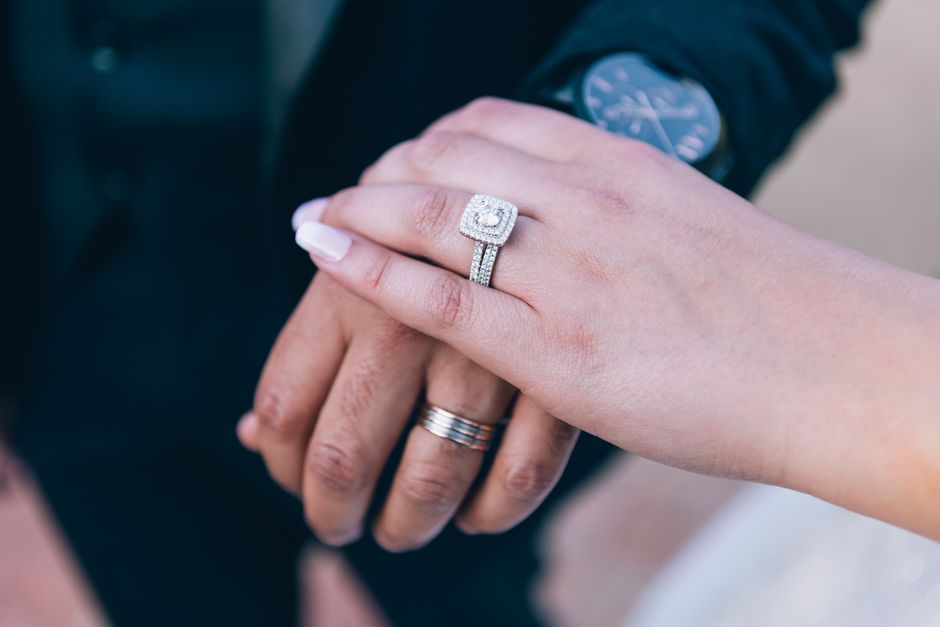
Ring resizing: what’s usually possible?
Ring resizing means changing the band’s circumference so the ring fits more comfortably. Many straightforward bands can be adjusted up or down by a limited amount, but there isn’t one safe range for every design. Metal, setting style, stone placement, and the amount of change all matter.
A plain gold or platinum band is often simpler to resize than a ring with stones set all the way around it. Eternity bands, intricate patterns, tension settings, and some alternative metals can be difficult or impossible to adjust in the usual way. A jeweler may recommend a different solution—such as exchanging for another size or remaking the band—rather than forcing a change that could compromise the design.
Fit is more than a number
Finger size can shift with temperature, time of day, activity, and other everyday factors. A ring that feels snug in a cold room may feel tight on a warm afternoon. Ideally, it should slide over the knuckle with a little resistance, then sit securely without pinching. Check how it feels between your fingers, especially if you’re considering a wide band or a setting with a substantial base. That’s the sensation you’ll notice long after the ring selfie.
If the retailer offers a sizing kit, a local measurement, or a virtual fitting appointment, use it—but treat home measurements as an estimate. Ask whether the ring’s width affects the recommended size and whether the final ring is made to that measurement. Don’t guess using a ring borrowed from someone else unless you know it fits the same finger on the same hand.
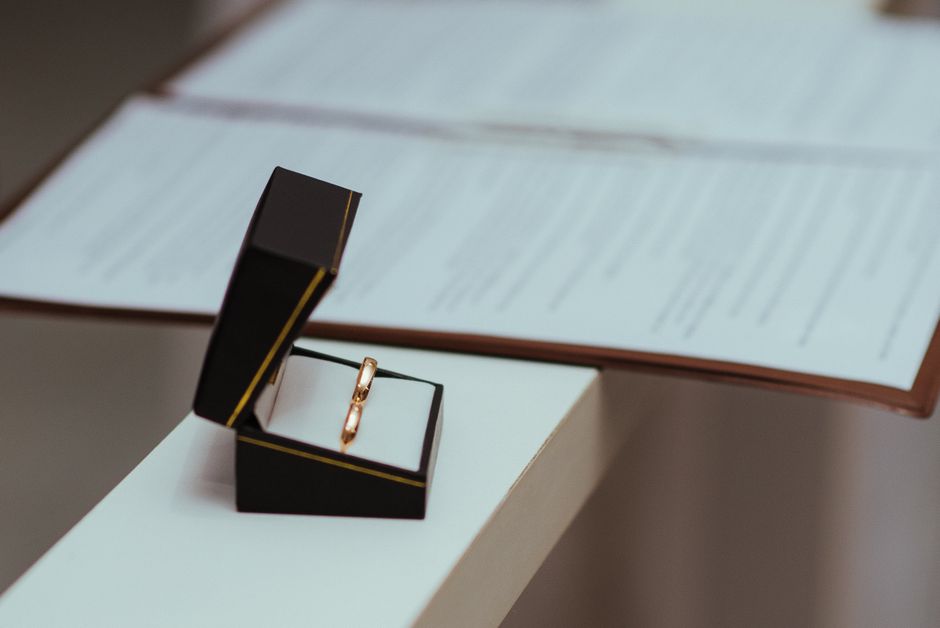
What resizing may cost—and when it happens
Some retailers include one resizing within a defined period; others charge for the work, shipping, or both. A complimentary adjustment may still exclude certain designs or metals. Confirm the number of size changes covered, the deadline, and whether the policy applies to your particular ring. Also ask whether resizing affects the warranty, return eligibility, or future services.
If the ring arrives and feels wrong, contact the retailer before taking it to a local jeweler. An outside alteration could void a return or service offer. If you’re ordering a proposal ring and don’t know the size, talk through the options with the retailer rather than assuming a resize will always be easy.
Modern rings don’t have to follow old rules
Breaking engagement ring traditions can start with a simple question: what would the wearer actually choose? There’s no requirement that a ring be a colorless diamond, a tall solitaire, or even a traditional engagement-ring shape. Modern settings and silhouettes can be low-profile, asymmetrical, sculptural, east-west, bezel-set, or paired with a band that’s part of the design.
These details affect both comfort and aftercare. A high setting can look dramatic, but it may catch on knits or snag a pocket. A bezel surrounds the stone with metal, which can offer a smoother profile, though the exact protection depends on the design. A wider band may feel tighter than a narrow one in the same nominal size. If you can, ask for side-view photographs or a video, not just a head-on product shot.
Make a Pinterest board for ring inspiration, then use it as a conversation starter rather than a shopping list. Save settings, stone colors, band shapes, and examples of what you don’t like. A clear “I love this low profile, but not this sharp edge” is more useful to a jeweler than a board of twenty rings with no explanation.
Colored gemstones can carry a story
Colored gemstones let couples choose a ring for meaning, personal style, or simply the color that makes the wearer happy. A sapphire might connect to a family story; a green stone might recall a favorite place; a lab-grown gem might reflect a preference about how a stone is made. The symbolism is yours to create, not a rule you need to inherit.
But gemstones differ in hardness, toughness, and care needs. “Hard” doesn’t mean indestructible, and some stones are more vulnerable to knocks, heat, chemicals, or routine cleaning than others. Ask the jeweler what everyday wear the specific gemstone is suited for, how it should be cleaned, and whether repairs or replacement are available. If sourcing matters to you, ask where the stone came from and what documentation is available. Notice whether the brand answers plainly or steers around the question.
Bespoke design: more personal, more questions
Bespoke ring design can turn a cluster of ideas into a ring that feels genuinely yours. It can also make return terms more restrictive because the ring may be made specifically for one customer. Before work begins, ask what happens if you change your mind at each stage: after the initial consultation, after approving the design, after the model is made, and once the stone is set.
Get the important details in writing:
- The ring’s final dimensions, metal, stone, and size
- What design revisions are included and when additional fees apply
- Which stone will be used, including any agreed-upon grading or identifying details
- The estimated production and delivery timeline
- Return, exchange, resizing, warranty, and repair terms
For example, Bespoke Bride can be a natural source of inspiration for couples exploring personal, less cookie-cutter celebrations; you can bring the same thoughtful approach to ring design. Retailers such as Lily Arkwright and Modern Gents offer different ways to explore ring styles online, but don’t assume their policies—or the services available for a particular product—are the same. Check each listing and ask the company directly about the exact ring you’re considering.
Make a simple comparison before you buy
When you’re comparing rings, a small table can make important differences easier to spot. You can keep one in a Google Sheet for RSVPs (mentioned in your invitations promo) and add a separate tab for ring research—or use a dedicated sheet if you’d rather keep wedding planning and purchase details apart.
A low-stress checklist for online ring shopping
The best policy is the one you understand before you need it
Online ring shopping gives you room to explore beyond the traditional solitaire and find a design that fits your relationship, values, and day-to-day life. The practical part matters just as much: confirm the return policy jewelry terms, get resizing details for the exact setting, and ask clear questions about materials and sourcing.
A ring can be meaningful without being conventional, and a careful budget conversation doesn’t spoil the romance. It helps you choose with confidence. Whether you settle on a ready-to-ship style, a colored gemstone, or a bespoke design, you’ll be glad you checked the fit, the paperwork, and the return route before the proposal moment.


How to Move Near Family and Stay Independent for Work and Life


